I’m not a comic strip artist by trade. By day, I’m an enterprise software architect. But in truth, I’ve spent my life torn between two loves: coding and art. From the time I could hold a crayon, I was drawing. By age eight, I was writing my first lines of code on the single computer in my school’s lab. My best friend Eric and I shared both passions—coding games in GW-BASIC, QBasic, and eventually languages like C++ and Java. But our shared love for art was what truly connected us. Eric, always a few steps ahead in skill, pushed me to play catch-up, inspiring me to dream bigger. We imagined becoming comic book artists, and we spent countless teenage days holed up in my room, immersed in computers, sketchpads, and ink, never sleeping, always creating.
When the dot-com boom happened in San Francisco in 1998, my career in software engineering took off. I was 19, full of energy and drive, and lucky enough to ride that wave. Companies entrusted me—a young, eager engineer—with opportunities I can’t imagine being given today. It felt like a whirlwind, and I threw myself headfirst into that career. I rose through the ranks, from junior developer to architect, executive, and eventually partner. Yet, all the while, my art was there. Always a constant companion, I’d dabble in gallery showings, enter art contests, and even sell my work. But despite the gratification, something was missing.
I missed those days—the pure, creative joy Eric and I shared, sitting on the floor, sketching comics while listening to The Cure or Metallica, cracking jokes over silly drawings, or marveling at how “totally cool” an inked page turned out. Just two California kids from the valley, dreaming big and believing that art could carry us wherever we wanted to go.
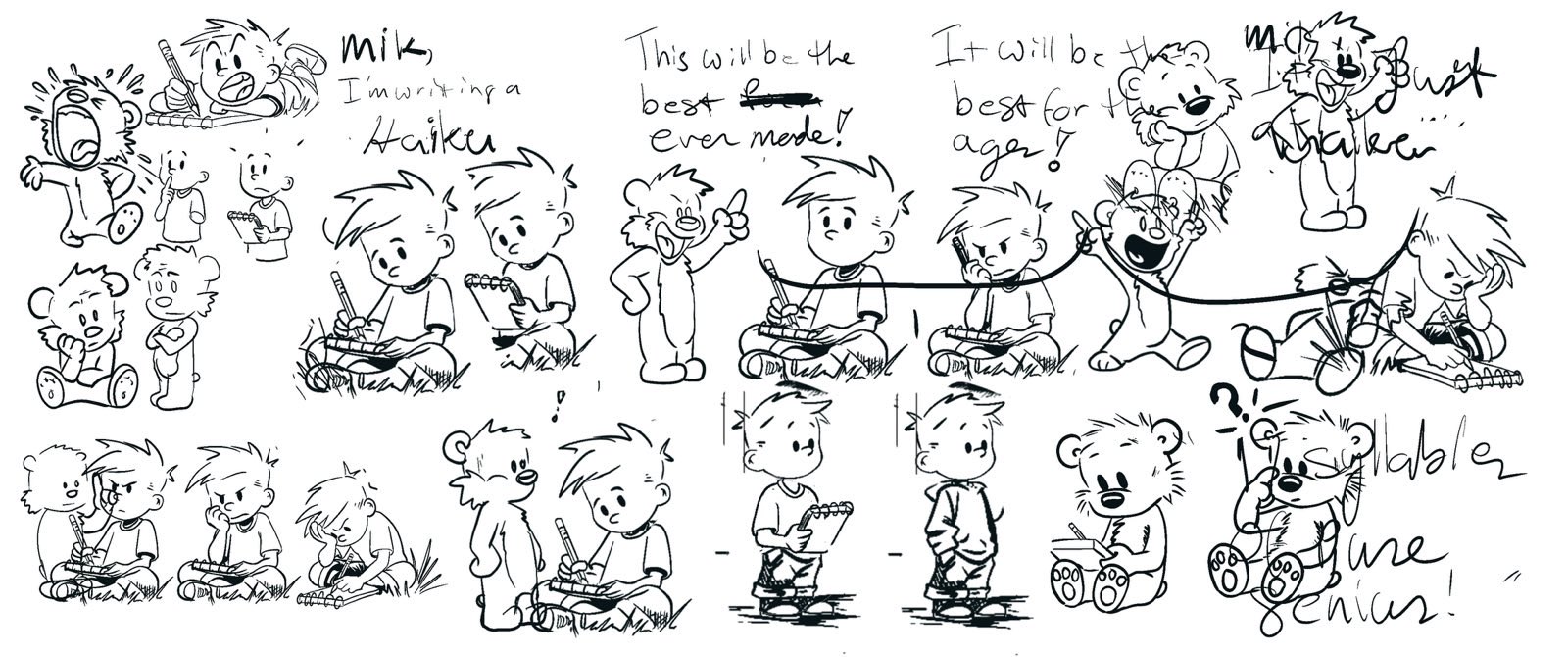
That’s where DerryBears comes in. It’s been a slow and beautiful return to the roots of my creativity. In the midst of life’s daily demands—family, work, responsibilities—I carve out time to draw these little comics. And in those moments, something clicks. The peace, the silliness, the unfiltered joy of creating is back. It’s not just my process anymore, though. I’ll share the early sketches with my wife and the family. Her giggle when a drawing lands just right? That’s fuel. Their feedback and ideas often nudge the comic into unexpected, better places. It’s a family affair now, and I love it.
The process itself is as nostalgic as it is refreshing. I’ll put on music—always something with a vibe that fits—and start sketching. I’ll rough out a general script in my head, though I rarely stick to it. I love the organic flow of creation, where one panel leads to another, and the best ideas come when you least expect them. I’ll redraw scenes until they feel right, giggling at the expressions or laughing out loud when a panel clicks.
This past month has taught me something important: comics don’t always need a punchline. Sometimes it’s about the story, the theme, or just capturing a moment. What matters most is being honest with the art, staying professional, and pouring your heart into every line you draw. Taking shortcuts? You’ll see it in the final work. But when you take the time to let an idea shine, it’s magic.
In a way, DerryBears has taken me back home. Out of all the creative mediums I’ve explored—paintings, sculptures, even woodworking—this comic strip has reconnected me to something deep in my past. It’s a version of me I thought I’d left behind, and I can’t help but imagine another version of myself in a parallel universe, living this life fully as a comic artist. That version of me? He’s probably still ahead, and I’m still catching up—not to Eric anymore, but to him.
And maybe that’s the beauty of it. I’m here now, drawing comics, recapturing a part of myself that brings so much joy. Whether it’s for me, for my family, or for anyone who laughs at these little panels, DerryBears is a love letter to creativity, to nostalgia, and to finding magic in the everyday moments.

Leave a Reply